

Designing Compact Aquaponic Systems for Small Spaces
Sustainability & Eco-Friendly Enhancements
For those aiming for long-term sustainability, consider these eco-friendly features:
- Solar-Powered Pumps: Reduce electricity costs and enhance system efficiency.
- Rainwater Collection: Utilize rainwater to reduce dependence on municipal water sources.
- Organic Fish Feed: Avoids chemical contamination and supports healthier fish and plants.
Composting & Worm Castings: Can be integrated with aquaponic setups for additional nutrient cycling.
Read more about: Maintaining Your Aquaponic System: Expert Tips for Long-Term Success
Optimizing System Components for Small Spaces
1. Tank Selection
For a compact aquaponic system, smaller fish tanks (10-50 gallons) are ideal. Common options include:
- Plastic Storage Bins: Affordable, lightweight, and easy to modify for an aquaponic setup.
- Aquariums: Aesthetic and functional for indoor setups, especially in living spaces or offices.
- Barrels or Tote Containers: Durable, space-efficient, and often repurposed for sustainable aquaponic gardening.
2. Grow Bed Configuration
To make the most of limited space, opt for:
- Vertical Towers: Allow multiple plants to grow in a small footprint, significantly increasing yield.
- Wall-Mounted Planters: Ideal for balconies and patios where floor space is minimal.
- Stacked Media Beds: Enhance productivity with tiered designs that utilize height effectively.
- Floating Beds for Water Tanks: These work well for maximizing plant production in small backyard ponds or reservoirs.
Read more about: Top Aquaponic Grow Bed Types Explained
3. Fish and Plant Selection
The choice of fish and plants should align with the system’s size and environmental conditions:
- Best Fish for Small Systems:
- Tilapia: Hardy and fast-growing, ideal for beginners.
- Goldfish: Low-maintenance and great for decorative indoor systems.
- Guppies & Bettas: Excellent for small-scale systems where space is extremely limited.
- Catfish & Koi: Suitable for slightly larger compact systems with a stable environment.
Read more about: Top Fish Species for Aquaponics and Their Care
- Best Plants for Small Space Aquaponics:
- Leafy Greens: Lettuce, spinach, kale, arugula, and Swiss chard thrive in small systems.
- Herbs: Basil, mint, cilantro, chives, and parsley grow well in compact media-based or NFT systems.
- Fruiting Plants: Strawberries, cherry tomatoes, and peppers can be grown with adequate lighting and space.
- Microgreens: Fast-growing and nutrient-dense, perfect for maximizing productivity in limited areas.
Read more about: Ideal Plants for Aquaponic Systems: Vegetables, Herbs, and Fruits
Water Management and Filtration
Efficient water use is essential in small space aquaponics. To ensure system sustainability:
- Use a Small, Energy-Efficient Pump: Minimizes electricity consumption while maintaining water flow, ensuring plants receive nutrients consistently.
- Incorporate a Biofilter: Helps break down fish waste into plant nutrients, ensuring optimal water quality.
- Monitor Water Parameters: Regularly check pH levels (6.8-7.2), ammonia
Read more about: The Future of Sustainable Farming: A Deep Dive into Aquaponics
Final Thoughts
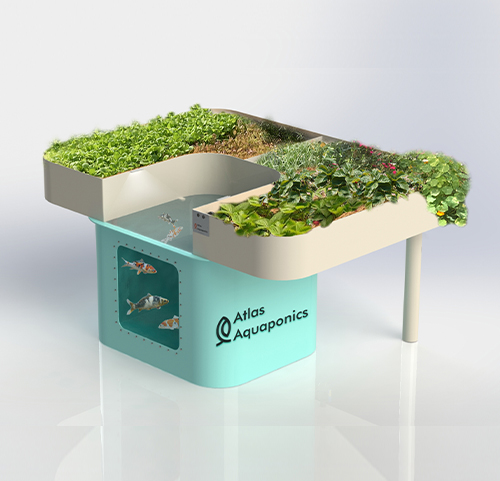
Designing a compact aquaponic system for small spaces is an innovative way to grow fresh, organic food while making the most of limited areas. Whether on a balcony, rooftop, or indoors, small-scale aquaponics is a rewarding and sustainable method of urban gardening. By choosing the right system design, optimizing space, and maintaining a balanced ecosystem, you can enjoy homegrown vegetables and healthy fish all year round.
At Atlas Aquaponic, we specialize in providing high-quality, compact aquaponic solutions tailored to small spaces. Whether you’re a beginner or an experienced aquaponics enthusiast, our expert guidance and innovative system designs will help you cultivate a thriving aquaponic garden at home. Contact us today to explore the best small-space aquaponics solutions for your needs!Aquaponics has revolutionized the way we grow food, making it possible to cultivate fresh produce and raise fish even in the smallest urban settings. For those with limited space, such as apartment dwellers or small backyard owners, compact system design is the key to successful small space aquaponics. By integrating aquaculture and hydroponics into a closed-loop system, aquaponics offers a sustainable, eco-friendly solution for growing organic food at home. This article will explore the essentials of designing an efficient, space-saving aquaponic system while ensuring maximum productivity and sustainability.