Maintaining Your Aquaponic System: Expert Tips for Long-Term Success
Aquaponics is an innovative fusion of aquaculture and hydroponics that creates a self-sustaining, soil-free farming system. While aquaponics offers numerous advantages such as water efficiency, organic production, and high yield farming maintaining a balanced system requires advanced knowledge and consistent monitoring. In this in-depth guide, we’ll walk you through professional level techniques for keeping your aquaponic system operating at peak efficiency.
Bu kapsamlı rehberde, akuaponik sisteminizin en yüksek verimlilikle çalışmasını sağlamak için profesyonel teknikleri ele alacağız.
Read more about: Aquaponics vs. Hydroponics: Key Differences
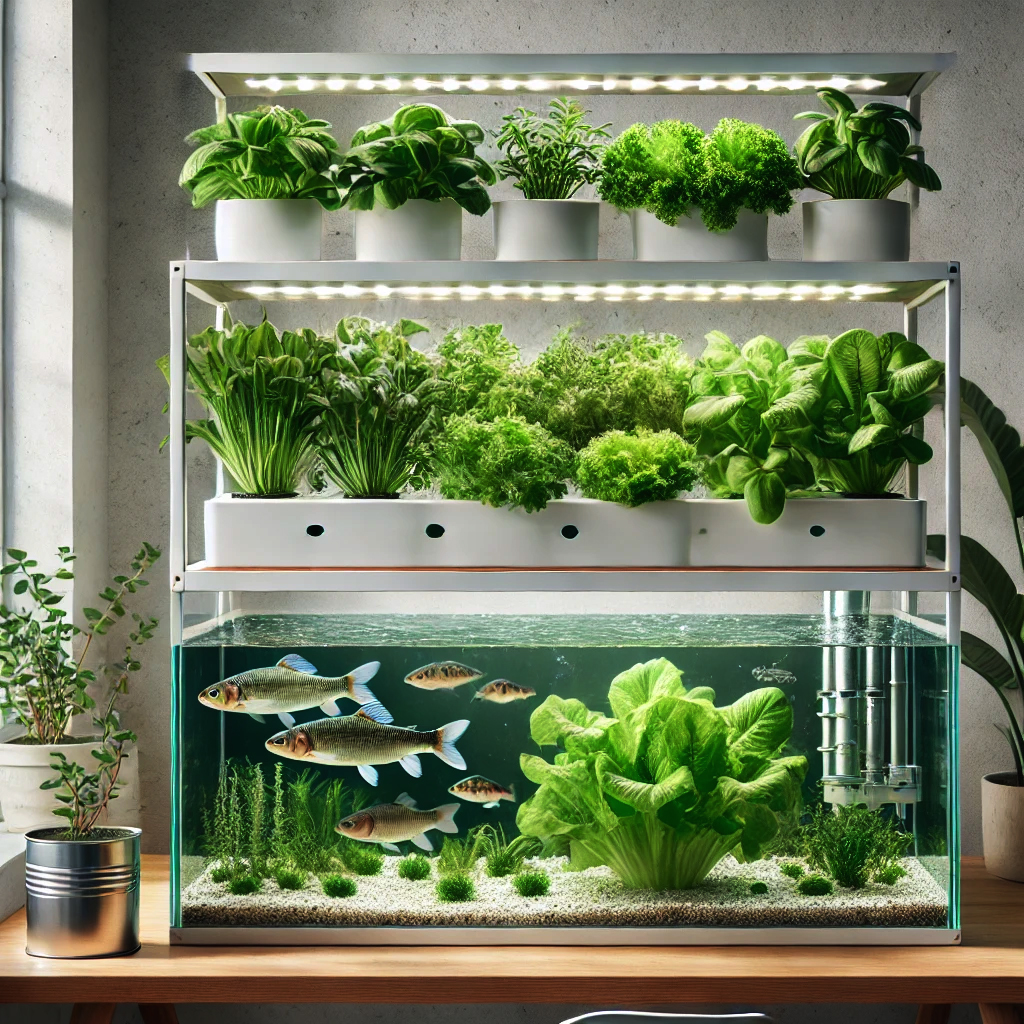
1. Mastering Water Quality: The Key to a Thriving Ecosystem
Water quality is the foundation of a healthy aquaponic system. Unlike traditional hydroponics, where growers can adjust nutrient levels at will, aquaponic farmers must balance fish waste, microbial activity, and plant nutrient uptake to maintain optimal conditions.
pH Management
The pH level affects fish health, bacterial activity, and nutrient availability. Ideally, aim for a range between 6.5 and 7.5:
Below 6.5: Beneficial nitrifying bacteria struggle to convert ammonia into nitrates, leading to toxic ammonia buildup.
Above 7.5: Essential nutrients like iron, calcium, and magnesium become less bioavailable, leading to plant deficiencies.
Pro Tip: Instead of chemical pH adjusters, use calcium carbonate (CaCO₃) or potassium bicarbonate (KHCO₃) to gently raise pH while supplementing nutrients. To lower pH, use phosphoric acid sparingly.
Read more about: Maintaining Your Aquaponic System: Expert Tips for Long-Term Success
Ammonia, Nitrite, and Nitrate Control
Amonyak (NH₃/NH₄⁺): Balık atıkları tarafından üretilir; 0.5 ppm’in üzerindeki seviyeler balıklar için toksiktir.
Ammonia (NH₃/NH₄⁺): Produced by fish waste; toxic above 0.5 ppm.
Nitrites (NO₂⁻): Intermediate byproduct; dangerous if lAquaponics is an innovative fusion of aquaculture and hydroponics that creates a self-sustaining, soil-free farming system. While aquaponics offers numerous advantages—such as water efficiency, organic production, and high-yield farming—maintaining a balanced system requires advanced knowledge and consistent monitoring. In this in-depth guide, we’ll walk you through professional-level techniques for keeping your aquaponic system operating at peak efficiency.
levels exceed 0.5 ppm.
Nitrates (NO₃⁻): Primary plant nutrient; safe up to 150 ppm but should be maintained around 20-80 ppm for balance.
Advanced Monitoring Tip: Use a digital probe or colorimeter for real-time data instead of standard test kits, which can be less precise.
Read more about: The Nitrogen Cycle in Aquaponics
Dissolved Oxygen (DO) Management
Dissolved oxygen (DO) directly impacts fish respiration, microbial activity, and root oxygenation. Target DO levels of 5-8 mg/L for optimal performance.
Optimization Techniques:
Increase aeration using high-efficiency air pumps and diffusers.
Use Venturi injectors to improve oxygen diffusion.
Monitor DO with a DO meter to prevent fish stress and anaerobic conditions.
2. Advanced Fish Care Strategies
The health of your fish directly affects nutrient cycling efficiency. Beyond standard feeding practices, expert aquaponic farmers implement species-specific care techniques.
Selecting the Right Fish for Your System
Each fish species has different water quality and temperature requirements:
Tilapia: Hardy, thrives in 20-30°C, tolerant of fluctuating conditions.
Trout: Requires colder water (10-18°C) and high oxygen levels.
Catfish: Prefers 22-28°C, well-suited for low-maintenance systems.
Pro Tip: Keep stocking density below 20 kg/m³ to reduce stress and prevent oxygen depletion.
Precision Feeding for Optimal Waste-to-Nutrient Conversion
Overfeeding leads to excess ammonia, biofilm formation, and system imbalance. The correct approach includes:
Automated feeding systems to deliver controlled portions.
Bioavailable, protein-rich diets tailored to fish species.
Periodic fasting (1-2 days per week) to allow for complete digestion and reduce ammonia spikes.
Read more about: Maintaining Your Aquaponic System: Expert Tips for Long-Term Success
3. Optimizing Plant Growth for Maximum Yield
Plant health depends on nutrient balance, root oxygenation, and light availability. Advanced growers use data-driven cultivation techniques to maximize efficiency.
Choosing High-Performing Crops
Certain crops thrive in aquaponic environments:
Leafy greens (lettuce, kale, basil): Ideal for high-nitrate conditions.
Tomatoes & Peppers: Require additional potassium (K) supplementation.
Strawberries: Perform well in media-based systems with pH control.
Advanced Tip: Supplement iron (Fe) using chelated Fe-EDDHA to prevent deficiencies, as iron uptake declines above pH 7.0.
Enhancing Root Oxygenation
Use flood-and-drain cycles in media beds to prevent root rot.
Aerate deep-water culture (DWC) setups with high-output air pumps.
Avoid over-compaction in media beds by using expanded clay pebbles instead of gravel.
Read more about: Top Aquaponic Grow Bed Types Explained
4. Proactive Equipment Maintenance
A well-maintained system runs efficiently with minimal downtime. Routine checks should focus on:
- Pump efficiency: Clean intake screens weekly and check for cavitation.
- Biofilter performance: Rinse bio-media with system water to avoid chlorine exposure.
- Backup power sources: Install UPS (uninterruptible power supply) to prevent oxygen depletion during power outages.
Pro Tip: Schedule maintenance before peak failure seasons (summer & winter) when temperature fluctuations can stress fish and plants.
Read more about: Essential Equipment for Aquaponics
5. Preventing Algae Overgrowth & Pests
Algae and pests compete for nutrients and disrupt ecosystem balance.
Algae Control
- Minimize light exposure by covering exposed water surfaces.
- Use UV sterilizers to limit algae spore propagation.
- Introduce algae-grazing fish like Plecos or Siamese algae eaters.
Pest & Disease Prevention
Encourage beneficial insects (e.g., ladybugs for aphid control).
Spray neem oil or insecticidal soap—safe for plants but keep it away from water.
Increase air circulation to prevent fungal infections in plant foliage.
Read more about:Top Aquaponic Grow Bed Types Explained
6. System-Wide Performance Monitoring
High-level aquaponic farms use smart monitoring tools to optimize system performance:
Automated water sensors for pH, ammonia, and nitrate levels.
IoT-enabled controllers to regulate pumps and aeration.
Cloud-based analytics for long-term trend tracking.
Pro Tip: Implement a real-time monitoring dashboard to receive alerts for parameter fluctuations.
Read more about: Aquaponics: Growing the Future, Naturally
Final Thoughts: Master Your Aquaponic System Like a Pro
Maintaining an aquaponic system at an expert level requires a combination of precision monitoring, proactive maintenance, and in-depth knowledge of biological interactions. By fine-tuning water quality, optimizing fish and plant care, and leveraging cutting-edge aquaponic technologies, you can achieve consistent, high-yield results.
Why ChooseAtlas Aquaponics ?
At Atlas Aquaponics , we provide state-of-the-art solutions, consulting, and system design services to help you optimize your aquaponic farm for maximum efficiency. Whether you’re a beginner or an experienced grower, our expertise ensures your success.
Read more about aquaponic in our blog : https://www.atlasaquaponics.com/en/blog/
Contact us today to elevate your aquaponic system!