
The Future of Sustainable Farming: A Deep Dive into Aquaponics
In an era where sustainable food production is more crucial than ever, aquaponics is emerging as a revolutionary solution. By integrating aquaculture (fish farming) and hydroponics (soilless plant cultivation), aquaponics creates a symbiotic ecosystem that maximizes efficiency, conserves resources, and produces nutrient-rich food. This innovative approach has the potential to address global food security challenges while promoting environmental sustainability.

Understanding Aquaponics: A Synergistic Farming Approach
Aquaponics is a closed-loop farming system that mimics natural ecosystems, allowing fish and plants to thrive together. Unlike conventional farming, which requires significant land, water, and chemical inputs, aquaponics optimizes resource use and creates a regenerative cycle.
Read more about: History and Evolution of Aquaponics
How Aquaponics Works: A Biological Process
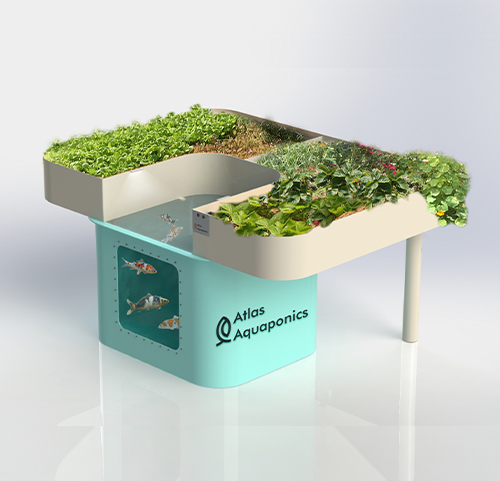
- Fish Tank: The system begins with a tank where fish produce waste in the form of ammonia-rich excrement.
- Biofilter & Nitrification: Beneficial bacteria convert toxic ammonia into nitrites and subsequently into nitrates, which serve as essential nutrients for plants.
- Grow Beds: Plants absorb the nitrates and other essential minerals, effectively purifying the water.
- Water Recirculation: The cleaned water is returned to the fish tank, maintaining a balanced, self-sustaining cycle.
This process eliminates the need for synthetic fertilizers and significantly reduces water consumption compared to traditional farming methods.
Read more about: Aquaponics Automation: How Smart Farming Technology is Revolutionizing Sustainable Agriculture
Key Advantages of Aquaponics Over Traditional Agriculture
1. Water Efficiency & Conservation
- Aquaponics uses up to 90% less water than soil-based agriculture because water is continuously recycled.
- Unlike conventional irrigation, which leads to significant water loss through evaporation and runoff, aquaponics retains and reuses water within a closed-loop system.
2. No Chemical Fertilizers or Pesticides
- The system naturally fertilizes plants through fish waste, eliminating the need for synthetic fertilizers.
- Pesticides and herbicides are avoided to protect the delicate balance of fish and beneficial bacteria.
3. Faster Plant Growth & Higher Yields
- Plants in aquaponic systems receive a constant supply of nutrient-rich water, allowing them to grow 30-50% faster than in soil.
- Year-round production is possible in controlled environments, reducing seasonal dependency.
4. Sustainable Protein & Food Production
- Fish such as tilapia, trout, catfish, and barramundi provide a renewable protein source while simultaneously fertilizing the plants.
- A single aquaponic system can produce both vegetables and fish, offering a dual-yield food supply.
5. Space & Energy Efficiency
- Requires 90% less land than traditional farming, making it suitable for urban and vertical farming.
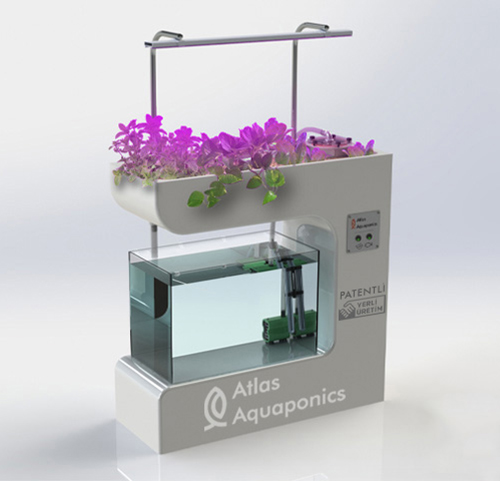
- Indoor aquaponic farms can use LED lighting and automation for optimized growth conditions.
Read more about: Top 5 Benefits of Aquaponics
Types of Aquaponic Systems: Choosing the Right Model
- Media-Based Aquaponics
- Uses grow beds filled with expanded clay pebbles, gravel, or lava rock to support plant roots and beneficial bacteria.
- Best for growing a wide variety of plants, including fruiting vegetables.
- Nutrient Film Technique (NFT)
- A thin film of nutrient-rich water continuously flows over plant roots.
- Ideal for growing leafy greens and herbs with minimal space.
- Deep Water Culture (DWC)
- Plants float on rafts above water, allowing roots to grow directly into the nutrient-rich solution.
- Commonly used in large-scale commercial aquaponic farms.
- Vertical Aquaponics
- Plants are stacked in multiple layers, optimizing vertical space for urban environments.
- Integrates advanced technologies such as automated nutrient dosing and AI-driven monitoring.
Read more about: Types of Aquaponic Systems: Which is Right for You?”
Optimal Fish and Plant Selection
Best Fish for Aquaponics
- Tilapia (fast-growing, resilient to water conditions)
- Trout (thrives in colder water)
- Catfish (bottom-feeders, high protein yield)
- Barramundi (fast-growing, excellent meat quality)
Best Plants for Aquaponics
- Leafy Greens: Lettuce, spinach, kale, arugula
- Herbs: Basil, mint, chives, cilantro
- Fruiting Crops: Tomatoes, peppers, strawberries, cucumbers
- Microgreens: High-value crops with rapid turnover
Read more about: Understanding Fish and Plant Compatibility in Aquaponics
Building and Maintaining an Aquaponic System
1. Setting Up a System
- Choose the right system based on available space, climate, and crop selection.
- Install proper filtration to maintain water quality and prevent fish stress.
- Cycle the system for 4-6 weeks before adding fish to establish beneficial bacteria.
2. Monitoring and Optimizing Water Quality
- pH Levels: Maintain between 6.8-7.2 for optimal nutrient absorption.
- Ammonia & Nitrite Control: Regularly test to prevent toxicity.
- Dissolved Oxygen: Ensure aeration to support fish health and root oxygenation.
3. Preventing Common Challenges
- Algae Growth: Limit direct sunlight exposure and maintain proper filtration.
- Nutrient Deficiencies: Supplement with iron, calcium, and potassium as needed.
- Pest Control: Introduce natural predators like ladybugs for insect management.
Read more about: Maintaining Your Aquaponic System: Expert Tips for Long-Term Success
The Future of Aquaponics: Innovations & Trends
With advancements in AI-driven monitoring, automation, and sustainable energy integration, aquaponics is set to revolutionize food production worldwide. Smart sensors, blockchain technology for traceability, and energy-efficient designs are enhancing scalability and profitability.
Commercial Applications
- Urban vertical farms supplying fresh produce year-round.
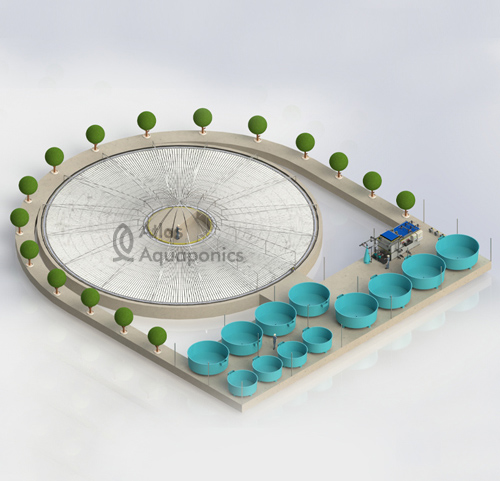
- Large-scale commercial facilities providing farm-to-table solutions for restaurants.
- Community-based systems enhancing local food security.
Read more about: Environmental Impact of Aquaponics
Conclusion:
Why Aquaponics is the Future of Farming
As the demand for sustainable, high-yield food production grows, aquaponics offers a viable, eco-friendly alternative to traditional agriculture. Whether for personal use or large-scale farming, this integrated system provides a renewable food source while conserving critical resources.
Explore our expert solutions at Atlas Aquaponic and start your journey into the future of farming today!