The Future of Aquaponics: Emerging Trends and Technologies
As the global food system faces mounting pressure from climate change, urbanization, and resource scarcity, aquaponics has emerged as a dynamic and scalable solution that combines sustainability, innovation, and efficiency. This integrated system—merging aquaculture (raising fish) and hydroponics (soil-free plant cultivation)—creates a closed-loop ecosystem that produces both protein and vegetables using minimal water and land.
At Atlas Aquaponic, we see aquaponics not only as a farming method but as a technology platform—one that can reshape how communities produce, consume, and interact with food. In this comprehensive guide, we’ll explore the emerging technologies and innovative farming models that are driving the aquaponics future, and explain how our work is shaping the next generation of sustainable agriculture

Why Aquaponics Is Positioned for Global Scale
Aquaponics is no longer experimental it’s strategic. Here’s why this approach is uniquely suited for the 21st century:
- Water Efficiency: Aquaponics uses up to 98% less water than traditional farming. Water circulates through the system, nourishing plants and being biologically filtered by the plants before returning to the fish tanks. This is critical in drought-prone regions.
- No Chemical Fertilizers or Pesticides: Fish waste provides natural nutrients for the plants, eliminating the need for synthetic inputs and protecting ecosystems.
- Urban Integration: Compact and scalable, aquaponic systems can be installed in rooftops, basements, and warehouses, making them ideal for urban agriculture and food deserts.
- Year-Round Production: Climate-controlled systems enable uninterrupted growing cycles—offering stable, predictable yields regardless of outdoor weather.At Atlas Aquaponics, we help clients design systems that capitalize on these benefits, tailoring each project to its environmental context and business goals.
Emerging Technologies Driving the Aquaponics Future
1. IoT-Driven Monitoring and Control Systems
Internet of Things (IoT) technology is revolutionizing aquaponics by automating critical environmental monitoring:
- pH, ammonia, and nitrate levels
- Dissolved oxygen and water temperature
- Humidity, CO₂, and light exposure for plant zonesThese sensors connect to cloud dashboards, giving growers real-time alerts and historical data analytics. Atlas Aquaponic integrates these technologies in all our systems, allowing clients to manage their farms remotely and increase uptime and yields.
2. AI and Machine Learning
Artificial Intelligence (AI) is unlocking new levels of precision:
- AI predicts fish feeding needs based on behavior and growth cycles.
- Machine learning optimizes lighting and nutrient flow based on plant growth phases.
- Advanced algorithms identify patterns indicating disease or imbalances early.We are currently piloting AI-enhanced system management modules in partnership with agri-tech firms to bring this intelligence to commercial and educational setups.
3. Blockchain for Transparent Supply Chains
In a world where food origin matters, blockchain technology ensures traceability from hatchery to harvest. This is especially valuable for:
- Premium buyers demanding organic, verifiable produce
- Restaurants and retailers who market transparency and sustainability
- Certification and export complianceAtlas Aquaponics offers optional blockchain integration for clients targeting traceable and premium food markets.
4. Digital Twin and Simulation Tools
Digital twin technology allows us to simulate system performance under different scenarios (temperature shifts, population density, power outages) before actual installation. This reduces operational risk and informs custom system design for diverse clients—from greenhouses in the Middle East to rooftop farms in North America.
5. Controlled Environment Agriculture (CEA)
Aquaponics increasingly merges with Controlled Environment Agriculture (CEA), using:
- LED grow lights tailored for plant types and growth stages
- HVAC systems for optimal humidity and temperature
- CO₂ injection and atmospheric control
Atlas Aquaponic designs fully integrated CEA facilities, ensuring year-round productivity, regardless of geography or season.
Biological Innovation in Aquaponics
Genetic Optimization
While still in early stages, scientists are exploring selective breeding and genetic tools to develop:
- Fish species with higher feed conversion rates and disease resistance
- Plants that thrive in aquaponic conditions with increased nutrient uptake
We monitor these developments closely, ensuring that our systems remain compatible and future-proof for emerging high-performance species.
Microbial Engineering
Probiotic bacteria and advanced biofilter substrates can accelerate nutrient cycling and improve system health. We incorporate biofilter designs that support rich microbial ecosystems for enhanced nitrogen conversion and overall system stability.
Innovative Farming Models and Business Applications
The aquaponics future isn’t limited to farms—it’s reshaping business models across industries. Some of the fastest-growing applications include:
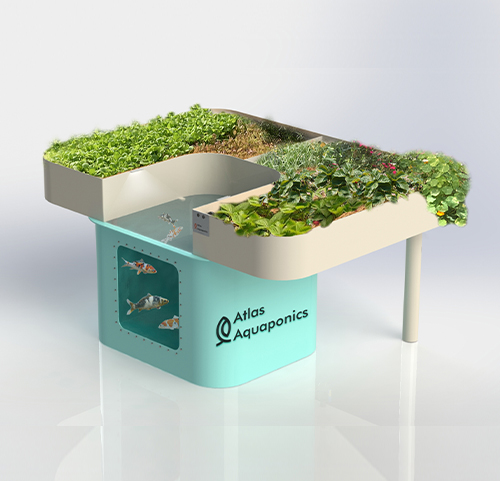
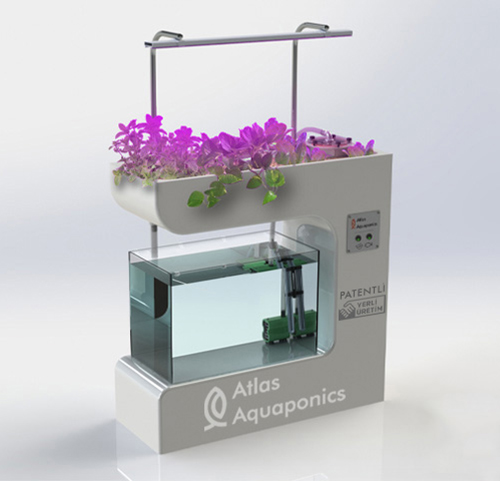
- Modular Microfarms: Small-scale systems for homes, schools, and restaurants. We offer turnkey solutions perfect for local food production.
- Aquaponics-as-a-Service (AaaS): Subscription-based models with installation, monitoring, and harvest support. Atlas Aquaponic provides custom service plans to reduce operational burdens for new growers.
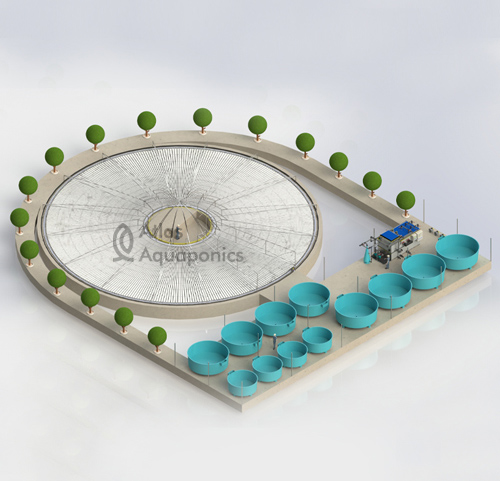
- Urban Farming Ventures: Companies are turning rooftops and warehouses into productive ecosystems that supply produce and fish to local markets.
- Corporate ESG Projects: Firms invest in aquaponics to meet sustainability goals, engage employees, and enhance CSR initiatives. We provide tailored proposals and impact tracking dashboards.
Challenges and Solutions in the Path Ahead
Despite its potential, aquaponics must overcome several hurdles:
| Challenge | Atlas Aquaponics Solutions |
| High Initial Capital Costs | Modular, phased systems; lease options; ROI modeling |
| Technical Expertise Requirements | In-person and online training; maintenance contracts |
| Regulatory Uncertainty | Assistance with zoning, licensing, and food safety compliance |
| Energy Dependency | Solar integration and low-power system design |
We are deeply involved in not only solving these issues for our clients but also shaping regulatory frameworks through partnerships with industry groups and policymakers.
What the Next Decade Holds
Looking forward, we expect to see:
- Solar and wind-powered aquaponics units for total off-grid operation
- Hybrid systems integrating algae for biofuels and bioplastics
- Zero-labor facilities with full AI/robotic automation
- Aquaponic tourism and education hubs as part of community development
Atlas Aquaponic is actively developing prototypes for many of these concepts, with pilot programs in both urban and rural environments.
Conclusion: Aquaponics as a Climate Tech Frontier
Aquaponics is more than a way to grow food it’s a model for resilient, regenerative, and intelligent agriculture. It merges ecology with engineering, biology with data, and local needs with global challenges.
At Atlas Aquaponics, our mission is to lead this transformation by designing, building, and supporting systems that deliver real impact—whether for a small community garden or a commercial food hub. We bring together technology, biology, and vision to create sustainable ecosystems for a food-secure future.

