How Aquaponics Can Contribute to Global Food Security
Rethinking Agriculture for a Sustainable, Nourishing Future
In a world facing increasing environmental instability, water scarcity, urban expansion, and population growth, food security has become one of the most pressing global concerns. By 2050, the global population is expected to surpass 9.7 billion, and conventional agriculture alone may not be capable of feeding the world without further degrading our planet’s natural systems. Aquaponics, an innovative, closed-loop method that combines aquaculture (fish farming) with hydroponics (soil-less plant cultivation), is emerging as a transformative solution to these challenges. With its low-resource inputs, minimal environmental impact, and potential for local, year-round food production, aquaponics is not just an alternative—it’s a necessity in the push toward sustainable food security.

Understanding Global Food Security
Before exploring the contribution of aquaponics, it’s important to define food security. According to the United Nations’ Food and Agriculture Organization (FAO), food security exists when all people, at all times, have physical, social, and economic access to sufficient, safe, and nutritious food that meets their dietary needs for an active and healthy life.
Today, over 735 million people globally suffer from chronic hunger, and even more experience nutritional deficiencies due to poor access to fresh produce and protein sources. The root causes of food insecurity include:
- Climate change, which disrupts crop cycles and reduces yields.
- Soil degradation, which affects 33% of global arable land.
- Water scarcity, with agriculture consuming 70% of global freshwater.
- Urbanization, which reduces agricultural land and isolates people from food sources.
- Conflict and displacement, leaving vulnerable populations dependent on food aid.
The limitations of traditional agriculture in addressing these issues underscore the need for resilient, scalable alternatives—like aquaponics.
What Is Aquaponics?
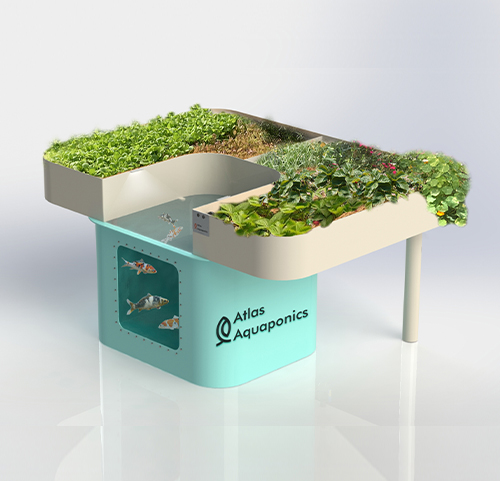
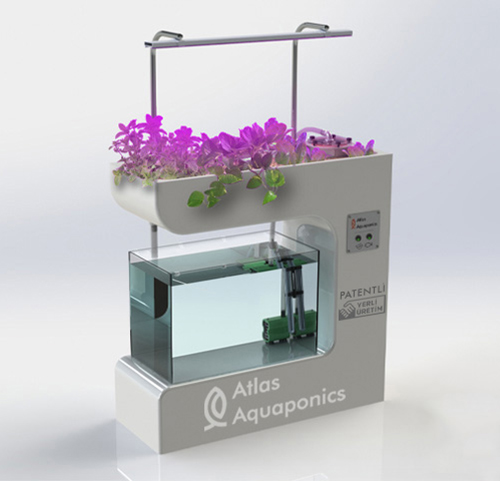
Aquaponics is a symbiotic system where fish and plants are cultivated together in a closed-loop, recirculating environment. Here’s how it works:
- Fish are raised in tanks, producing waste rich in ammonia.
- Beneficial bacteria convert the ammonia into nitrates—an essential nutrient for plants.
- Plants absorb these nutrients, cleaning the water in the process.
- The purified water is then returned to the fish tanks, creating a sustainable, self-regulating ecosystem.
This model mirrors natural ecosystems and eliminates the need for chemical fertilizers, pesticides, or large tracts of arable land.
Key Ways Aquaponics Supports Global Food Security
1. Resource Efficiency
Aquaponics systems use up to 90% less water than conventional agriculture, making them ideal for regions facing drought, water shortages, or limited access to clean water. Since the water is recirculated continuously, only minor top-ups are needed due to evaporation or plant uptake.
In addition, because plants grow in water, aquaponics requires no soil, making it a powerful tool in areas suffering from soil degradation, erosion, or contamination.
2. Dual Food Production
Aquaponics produces two high-value food sources in one system:
- Fresh vegetables: Lettuce, kale, spinach, tomatoes, cucumbers, peppers, and herbs.
- Protein from fish: Tilapia, catfish, trout, perch, and other species depending on the climate.
This combination addresses both macronutrient and micronutrient deficiencies, helping communities meet balanced dietary needs without relying on complex supply chains.
3. Local, Year-Round Production
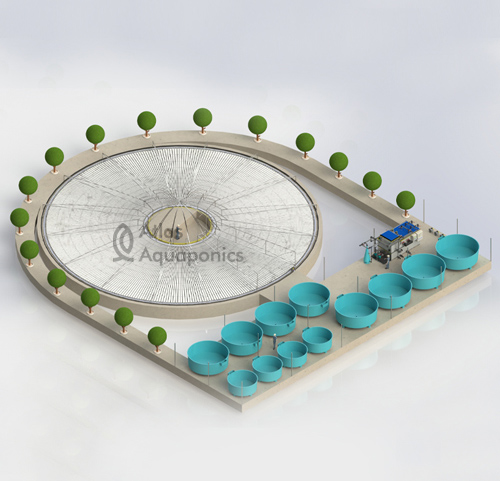
Aquaponics can be implemented in urban rooftops, abandoned buildings, shipping containers, or greenhouses, providing access to food in densely populated areas with limited arable land. These systems can operate year-round with the help of controlled environments, making them less vulnerable to seasonal changes, climate fluctuations, or geopolitical disruptions.
In food-insecure regions, aquaponics systems allow for localized food production, reducing dependency on imports and long-distance transportation, which can drive up costs and carbon emissions.
4. Scalability and Adaptability
From small backyard operations to commercial-scale farms, aquaponics is highly modular and adaptable. Systems can be built using local materials, solar-powered pumps, and simple construction techniques, making them accessible to smallholder farmers, schools, NGOs, and startups alike.
Aquaponics is especially valuable in humanitarian settings such as:
- Refugee camps and post-disaster areas.
- Communities affected by conflict or displacement.
- Urban food deserts in developed countries.
When properly supported, these systems can empower communities, improve self-sufficiency, and promote long-term resilience.
5. Environmental Benefits
Traditional farming contributes to deforestation, greenhouse gas emissions, pesticide runoff, and biodiversity loss. Aquaponics significantly reduces environmental impact by:
- Eliminating agricultural runoff.
- Using fewer inputs (no fertilizers, fewer chemicals).
- Requiring less energy per unit of food when optimized.
- Encouraging biodiversity through integrated pest management and polyculture.
Moreover, aquaponics aligns with regenerative agriculture principles and the circular economy model—where waste from one element becomes input for another.
Real-World Examples of Aquaponics in Action
Aquaponic farms and pilot projects are thriving in diverse regions worldwide:
- Jordan & Kenya: UN-supported refugee camp aquaponics provide fresh food and income opportunities for displaced families.
- Chicago & New York: Urban aquaponic farms bring healthy produce to underserved neighborhoods while creating green jobs.
- Southeast Asia & the Pacific Islands: Small-scale aquaponic farms help remote villages improve food security without needing to import fresh produce.
Each of these cases highlights how aquaponics can be adapted to local contexts to fight hunger, malnutrition, and poverty.
Challenges and What’s Needed to Scale
Despite its potential, aquaponics faces a few barriers to widespread adoption:
- High startup costs for equipment, training, and setup.
- Need for technical knowledge, including biology, chemistry, plumbing, and electrical systems.
- Access to quality fish feed, clean water sources, and climate control equipment in remote areas.
However, these challenges are not insurmountable. With government incentives, nonprofit partnerships, education initiatives, and microfinancing, aquaponics can scale into a robust solution for global food challenges. Public awareness, local entrepreneurship, and community-led innovation are key.
The Role of Atlas Aquaponic
At Atlas Aquaponic, we are dedicated to helping individuals, communities, and institutions implement aquaponic systems that are efficient, affordable, and tailored to their environments. Whether you are:
- A rural farmer seeking year-round productivity.
- A city planner designing sustainable urban food infrastructure.
- An NGO supporting food sovereignty in vulnerable regions…
…we are here to provide design support, training, equipment, and long-term guidance.
Conclusion: A New Chapter for Global Food Systems
Aquaponics alone won’t solve world hunger—but it is a powerful piece of the solution. As part of a broader strategy for sustainable food production, aquaponics offers a way to:
- Conserve natural resources.
- Empower local food producers.
- Deliver fresh, nutritious food to those who need it most.
In a future where climate volatility and population growth are the new norm, aquaponics represents resilience, innovation, and hope.
The path to global food security must be rooted in sustainability—and aquaponics is helping to lead the way.

